Atlas of Multiverses & Cosmic Structures
An interactive observatory cataloguing verified empirical spacetime phenomena alongside leading theoretical and speculative multiverse cosmologies.
Multiverse Theoretical Models
Theoretical physics operates on rigorous mathematical equations, distinct from empirical verification. While general relativity and quantum mechanics permit multiverse solutions, none have received direct observational confirmation. Below are six leading scientific frameworks.
Many-Worlds Interpretation
Proposed by Hugh Everett III in 1957, this quantum formulation posits that the wave function never collapses; instead, every quantum measurement branches reality into mutually unobservable decoherent quantum worlds.
Many-Worlds Interpretation
Every quantum branching event splits reality into decoherent, mutually unobservable parallel timelines without wave function collapse.
Eternal Inflation / Bubble Universes
Rapid primordial inflationary expansion never stops globally, continually seeding isolated pocket or bubble universes across an accelerating multiverse void.
Quantum Multiverse
Unification of Everettian quantum decoherence with cosmological horizon theory across global vacuum states.
Mathematical Universe Hypothesis
Radical hypothesis that our external physical reality is a mathematical structure, meaning every consistent set of equations exists as a real universe.
Brane Multiverse
Spacetime exists as a four-dimensional membrane suspended inside a higher-dimensional bulk alongside companion parallel branes.
String Theory Landscape
Compactifications of extra dimensions yield 10^500 possible vacuum configurations, each with distinct physical constants and elementary particle properties.
Empirical Cosmic Structures
Before probing speculative parallel cosmoses, we study the verifiable architecture of our observable universe: nebulae stellar nurseries, spiral galaxy dynamics, and gravitational lens fields.
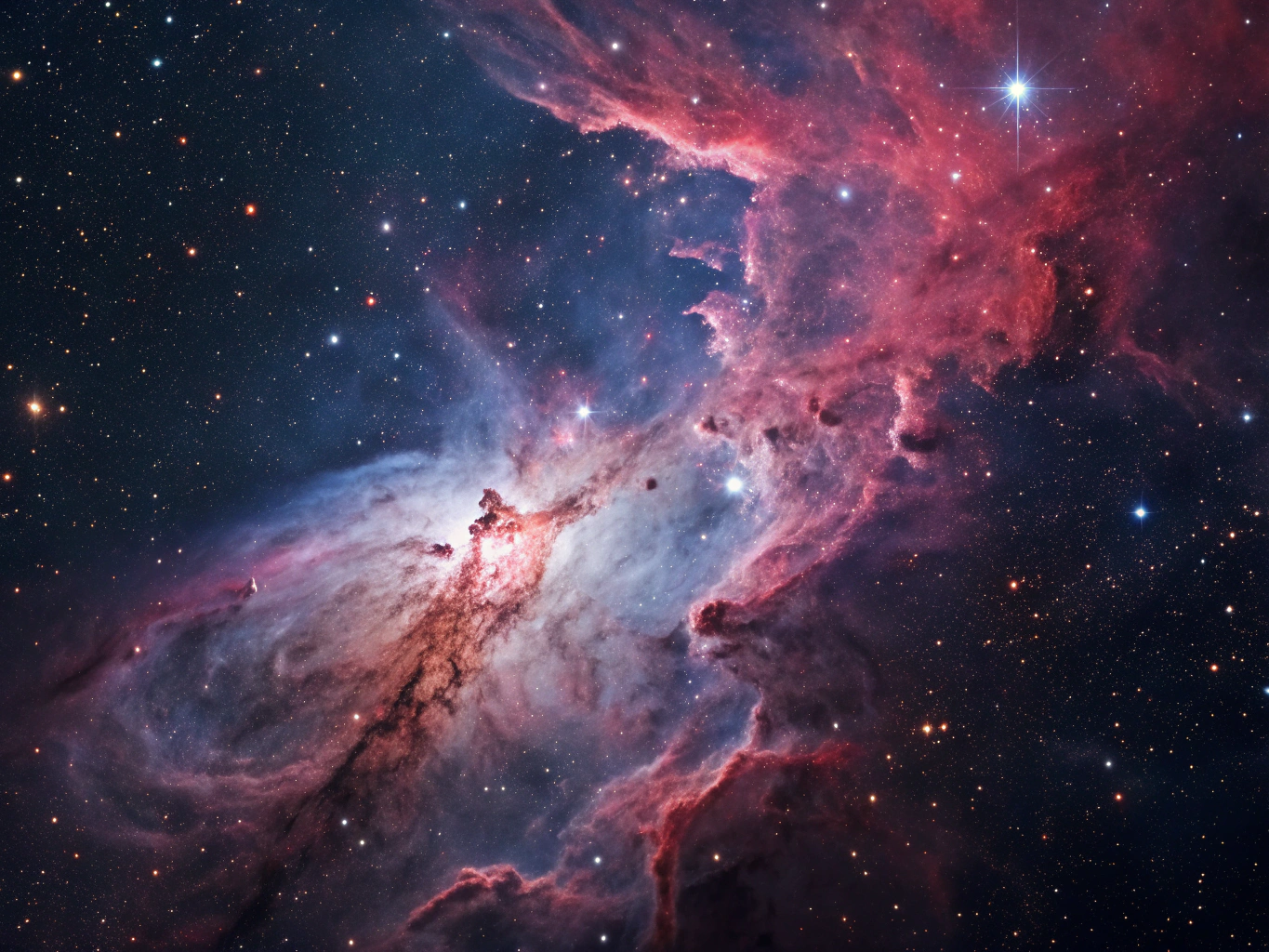
Intense ultraviolet radiation from massive nascent stars carves dense molecular gas towers across three light-years of interstellar space.
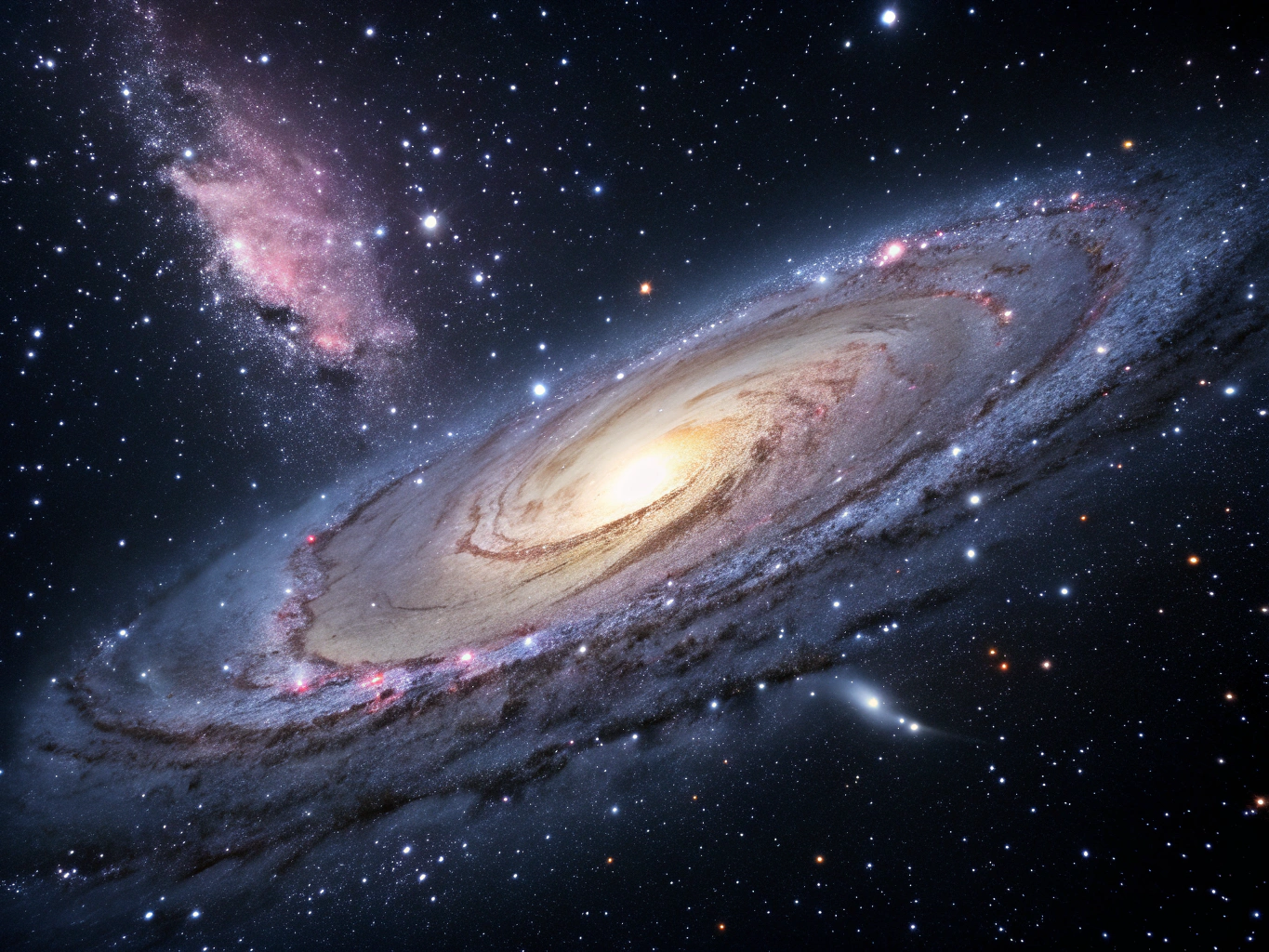
Grand-design spiral arms trace density waves compressing interstellar gas, initiating synchronized epochs of high-mass star formation.
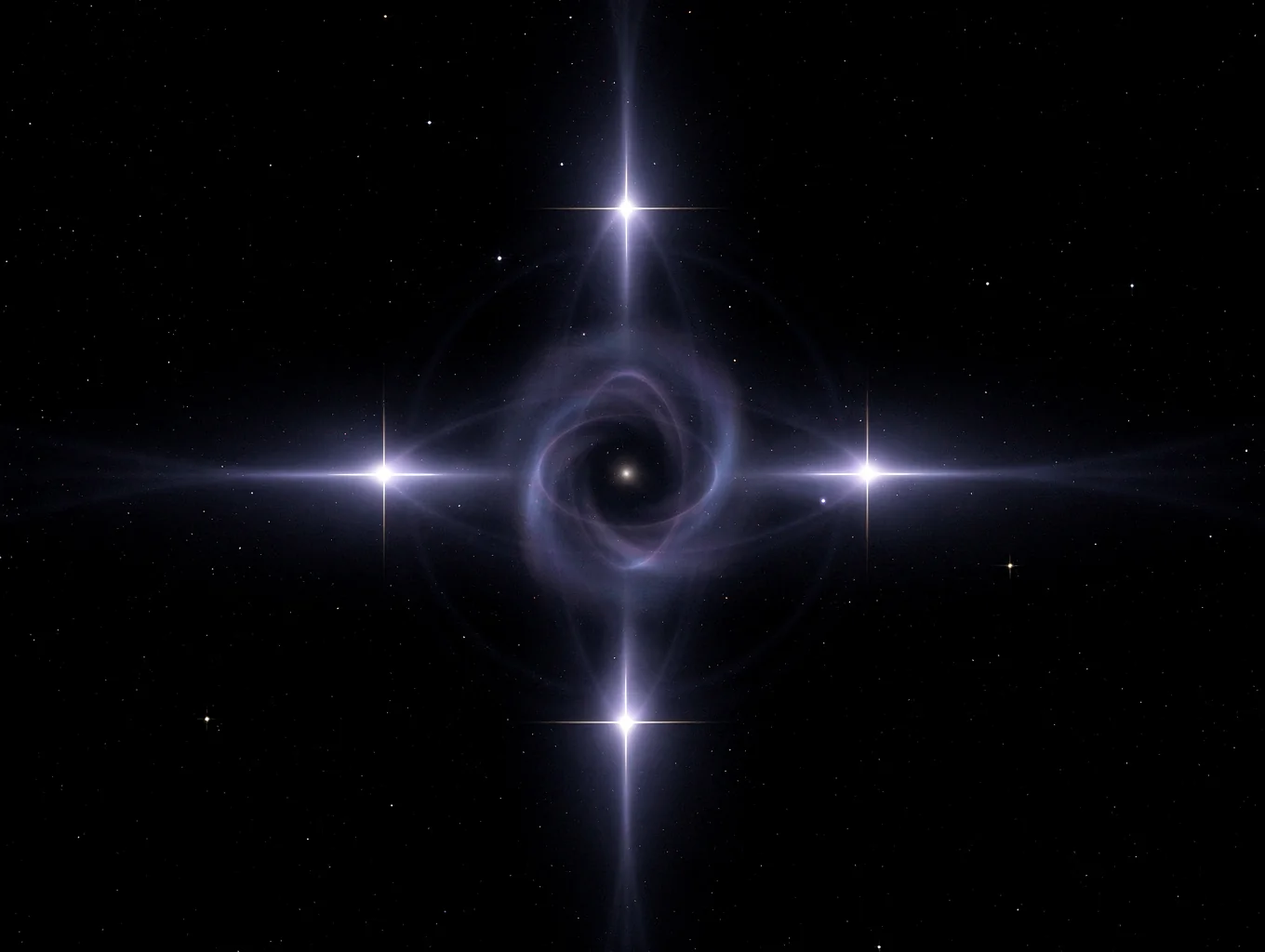
Spacetime warped by an intervening galactic core splits photons from a distant background quasar into four symmetrical mirage points.
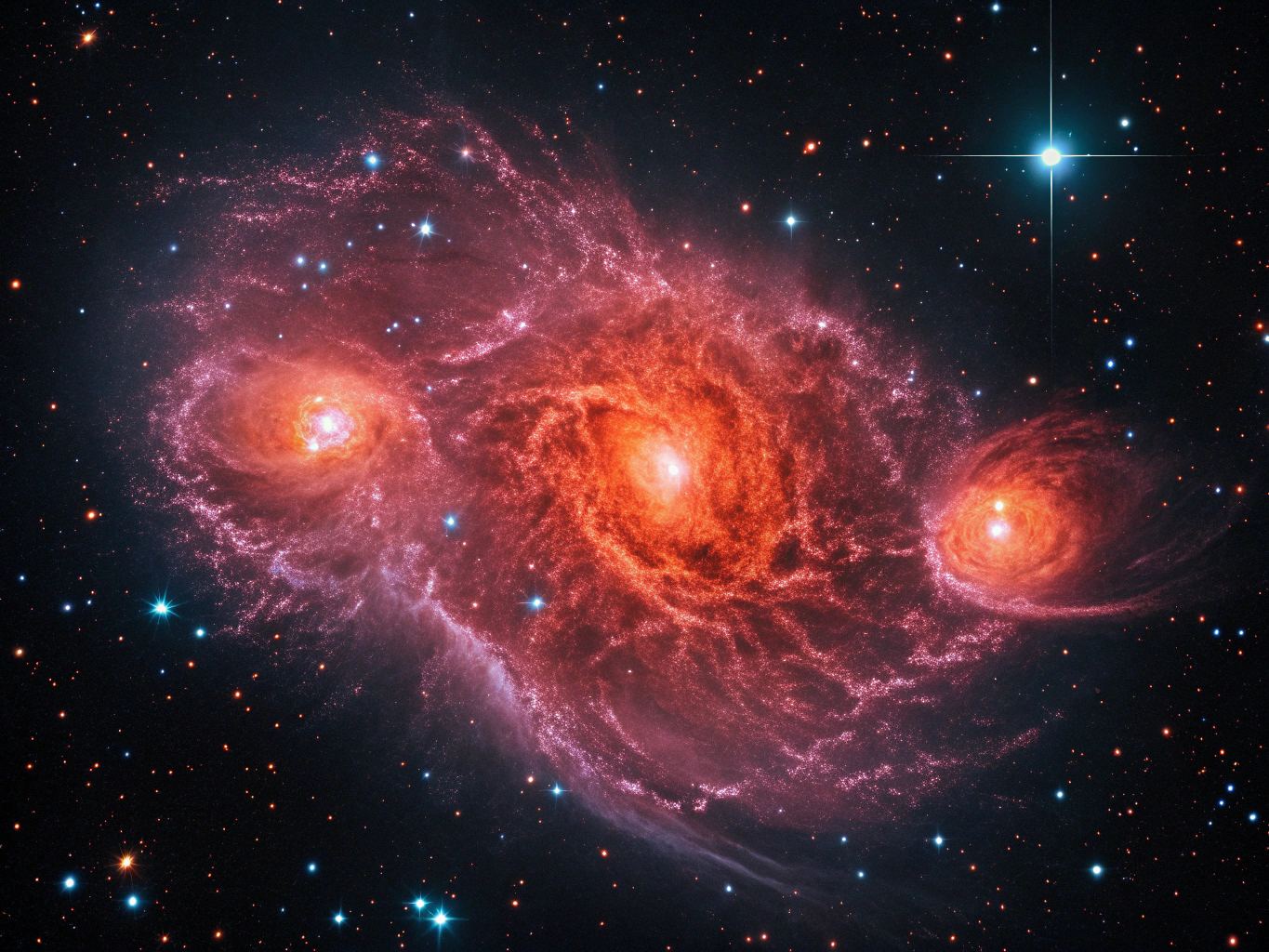
Supermassive black hole pressure waves oscillate through superheated intra-cluster gas, generating vast magnetic cosmic filaments.
Ready to Configure Fundamental Physical Laws?
Use our interactive physics simulator to adjust cosmological constants, matter-antimatter balance, and spatial dimensions to discover what universe emerges.